Schedule Tree Trimmings Before Storm Season
How to Trim a Tree Safely and Properly: A Complete Guide
How to Trim a Tree Safely and Properly: A Complete Guide
Maintaining an attractive outdoor space takes real work, and caring for your trees is a major part of that equation. Beautiful, well-maintained trees do more than just boost your property’s curb appeal; they protect your roof from overhanging limbs, keep your family safe from falling branches, and ensure your landscape thrives for years to come.
Many homeowners enjoy getting their hands dirty with a weekend project. If you are thinking about tackling some yard maintenance, understanding how to trim a tree properly is critical. Doing it wrong can permanently damage or even kill a tree you love, while improper safety steps can lead to severe injuries or property damage.
This guide walks you through the essential tree trimming tips, proper cutting techniques, necessary gear, and critical safety rules so you can confidently determine when to handle a diy tree trimming project and when it is time to bring in professional support.
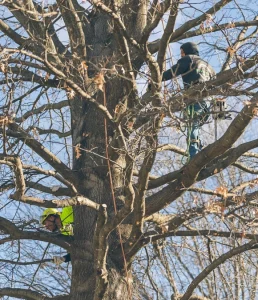
Why Proper Tree Trimming Matters
Trimming isn’t just about making a tree look neat and tidy. It is a vital maintenance step that impacts the health, structural integrity, and safety of the vegetation on your property. When we perform professional tree trimming and pruning, we focus on three core objectives:
1. Protecting Your Property and Family
Dead, diseased, or damaged branches can snap at any moment, especially during heavy winds, ice storms, or summer thunderstorms. By proactively removing these hazards, you protect your roof, vehicles, power lines, and, most importantly, the people walking below.
2. Boosting Tree Health
Just like regular haircuts, strategic cuts help a tree thrive. Removing crowded branches opens up the canopy, allowing more sunlight and air circulation to reach the inner leaves. This reduces the risk of fungal infections and pest infestations. Furthermore, cutting away dying limbs allows the tree to direct its precious nutrients and water to the healthy sections.
3. Enhancing Visual Appeal
An overgrown, misshapen tree can make an otherwise pristine yard look neglected. Proper shaping highlights the natural structure of the tree, opening up your view and instantly upgrading your property’s overall curb appeal.
Essential Tools for DIY Tree Trimming
Before making your first cut, you need to gather the right gear. Using the wrong tool can cause jagged, tearing wounds on the bark that leave the tree vulnerable to disease. Always make sure your blades are sharp, clean, and well-oiled.
| Tool Name | Perfect For |
| Hand Pruners (Bypass Shears) | Small twigs, thin growth, and small branches up to 3/4 inch in diameter. |
| Loppers | Medium-sized branches between 1 and 2 inches thick. The long handles provide excellent leverage. |
| Pole Saw | Reaching branches that are higher up in the canopy without using a ladder. |
| Pruning Saw | Thick, woody branches ranging from 2 to 5 inches in diameter. These saws cut on both the push and pull strokes. |
Pro Tip: Clean your tools with rubbing alcohol or a diluted bleach solution before moving between different trees. This simple step prevents the accidental spread of harmful plant diseases across your yard.
Critical Tree Trimming Safety Rules
Tree work is inherently hazardous. Every year, thousands of homeowners end up in emergency rooms due to preventable yard accidents. Before you pick up a saw, memorize and implement these essential tree trimming safety protocols.
Wear the Right Personal Protective Equipment (PPE)
Never step into the yard to cut branches without protective gear. At a minimum, you should always wear:
- A sturdy hard hat to protect your head from unexpected falling debris.
- Safety glasses or goggles to keep sawdust, flying wood chips, and sharp twigs out of your eyes.
- Heavy-duty leather gloves to protect your hands from blisters, cuts, and splinters.
- Steel-toe boots or supportive work boots with excellent grip to keep your footing stable.
Stay Grounded: Avoid Ladders with Chainsaws
One of the most dangerous things a homeowner can do is climb up a ladder while operating a heavy, moving chainsaw. If a heavy branch swings back unexpectedly, it can easily knock you off balance. As a rule of thumb for DIYers, if you cannot reach a branch using your own two feet on the ground or with a reliable pole saw, leave it to an experienced residential tree service.
Assess the Danger Zone
Look up and check your surroundings before starting. Identify where you expect the branch to fall, and keep children, pets, and bystanders completely clear of that area. Never cut branches that are within 10 feet of utility lines. If a tree is touching or growing near power lines, stop immediately and call your local utility provider or a certified arborist service.
When is the Ideal Time of Year to Trim?
Timing matters just as much as technique. While you can remove dead, broken, or diseased wood at any time of the year, major structural trimming should ideally be done during specific seasons depending on the tree type.
Late Winter / Early Spring (Dormant Season)
For most native trees in our region, the ideal time for structural trimming is during the late winter months when the tree is dormant. Because the leaves are gone, it is much easier to see the overall branch structure and identify problem areas.
Trimming right before spring growth begins allows the tree to heal its wounds rapidly as soon as the weather warms up. Additionally, dormant trimming minimizes the risk of pest infestations and disease transmission, as fungal spores and destructive insects are inactive in the freezing cold.
Summer Trimming
You can do light trimming in the summer to slow down the growth of specific branches or to shape the canopy. It is also an excellent time to spot and remove deadwood, as dead branches stand out starkly against the green canopy. However, avoid heavy pruning during hot, dry summer stretches, as this can severely stress the tree.
Autumn Caution
As a general rule, avoid extensive pruning during the fall. Fungal spores are highly active during autumn, and trees heal much slower during this transition period, leaving open cuts exposed to potential infections.
Step-by-Step Guide on How to Trim a Tree
When you are ready to begin, follow this systematic approach to ensure you cut safely and promote quick healing.
Step 1: Inspect the Tree
Walk around the entire tree and look at it from different angles. Identify the branches that need to go. Look for the “3 Ds”: Dead, Damaged, or Diseased wood. Also look for branches that cross and rub against each other, as this friction wears down the bark over time.
Step 2: Locate the Branch Collar
Look closely at where the branch meets the main trunk. You will notice a slight swelling or a rough ring of bark at the base. This is called the branch collar.
The collar contains special cells that help the tree seal off the cut and heal itself. Never cut flush against the trunk. A flush cut destroys the branch collar, leaving a permanent wound that can rot. Instead, make your cut just outside this raised collar.
Step 3: Use the Three-Cut Method
For any branch thicker than an inch, using a single downward cut will often cause the heavy limb to snap prematurely. When it breaks, it can tear a long strip of bark down the side of the trunk, causing severe, permanent damage. To avoid this, always use the professional three-cut method:
- The Undercut: Make a small cut on the underside of the branch, about 12 to 18 inches away from the main trunk. Cut roughly one-third of the way through the branch. This notch acts as a stopper, preventing a falling limb from tearing the bark down the trunk.
- The Relief Cut: Move a few inches further out on the branch, away from the trunk. Cut all the way through the limb from the top down. The branch will fall away safely, leaving a short stub without tearing any bark.
- The Final Cut: Now that the heavy weight is completely gone, you can make a precise, clean cut just outside the branch collar to remove the remaining stub.
Step 4: Step Back and Review
Take a break after every few cuts to step back and evaluate your progress. It is incredibly easy to get carried away when you are close to the tree. Remember, you can always cut more later, but you can never put a branch back once it has been severed.
Common Tree Trimming Mistakes to Avoid
Avoiding bad practices is just as important as learning the correct techniques. Keep these common pitfalls in mind:
- Tree Topping: This involves cutting off the top of a tree’s main trunk to reduce its height. Topping stresses the tree, ruins its natural structure, and forces the rapid growth of weak, dangerous limbs that are highly prone to snapping in storms.
- Over-Pruning: Never remove more than 25% of a tree’s living canopy during a single season. The leaves are the tree’s food factory; removing too many leaves starves the tree, leaving it weak and defenseless against pests.
- Leaving Long Stubs: Leaving long, ugly stubs hanging off the trunk prevents the branch collar from sealing properly. The stub will slowly die and rot, providing an open highway for pests and disease to tunnel directly into the center of the trunk.
- Applying Tree Wound Dressings: Many people think painting tar or wound sealant over a fresh cut helps it heal. Research shows these products actually trap moisture and bacteria inside, worsening rot. Trust the tree’s natural defense mechanisms to heal the clean cut on its own.
When to Put Down the Saw and Call a Professional
While light pruning of low, manageable branches is a rewarding weekend chore, many situations demand heavy equipment and specialized training. You should always step aside and call a reputable tree service company if:
- The branches are high up and require climbing or extended ladder work.
- The tree is large and positioned close to your house, garage, fencing, or outdoor power lines.
- The tree has severe storm damage, deep trunk cracks, or large hanging limbs that require an immediate emergency tree service.
- You need to take down an entire structure that requires an experienced tree removal contractor.
- You do not have the proper safety gear, sharp cutting tools, or physical confidence to handle the project.
Get Dependable Service You Can Count On
If you have overgrown, hazardous, or storm-damaged trees crowding your yard, you do not have to tackle dangerous outdoor work alone. We understand how stressful it can be to worry about falling branches during our severe Midwest weather seasons, and we are here to provide a safe, reliable solution. With over 20 years of experience in the industry, our dedicated crew handles everything from precise trimming to complete tree removal, thorough stump grinding, and detailed yard cleanup. We pride ourselves on showing up on time, communicating with absolute honesty, and always leaving your yard cleaner than we found it. Contact Gilbert’s Stump Grinding & Landscaping at (913) 980-2350 today to talk about our current promotions on removals and tree trimmings, and let us help you build a safer, more beautiful property.